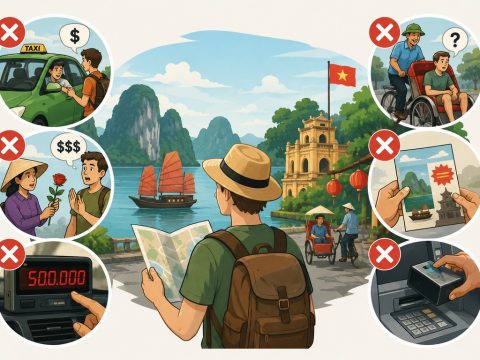
Getting around Vietnam is easier than ever. From ride-hailing apps and traditional taxis to sleeper buses, trains, domestic flights, and private transfers, travelers have plenty of transportation options. Most journeys are safe, affordable, and reliable.
However, as in many popular tourist destinations, a small number of dishonest drivers and operators may try to take advantage of visitors who are unfamiliar with local prices or transportation systems.
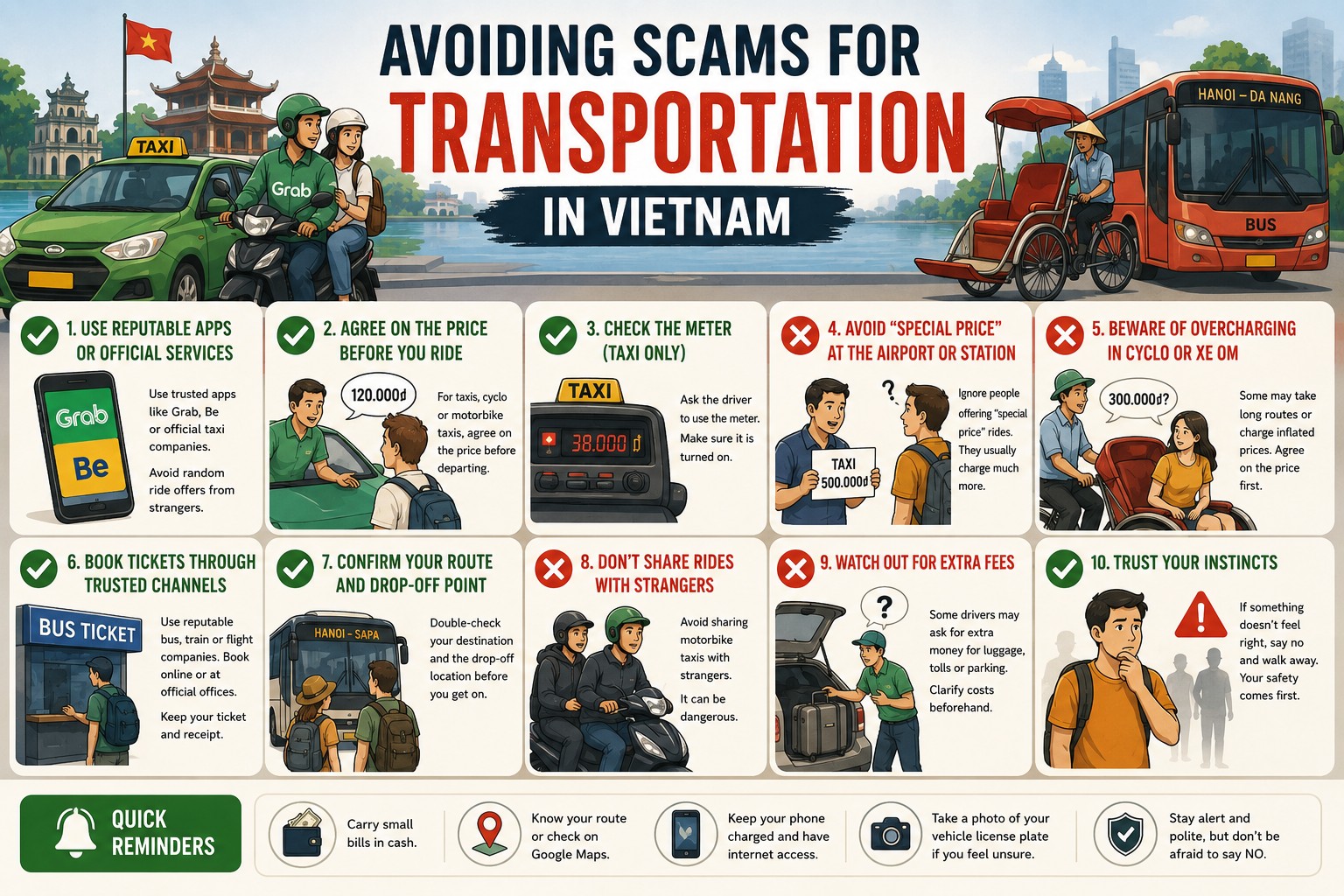
The good news is that transportation scams in Vietnam are usually easy to avoid. With a little preparation and a few simple habits, you can travel confidently throughout the country.
Is Transportation in Vietnam Safe?
Yes.
Vietnam is generally considered a safe country for travelers, and millions of tourists use local transportation every year without any problems.
Most drivers are honest and professional. The scams that do occur are usually non-violent and involve overcharging, misleading information, or unauthorized services rather than personal safety.
Knowing what to expect is the best way to avoid unnecessary expenses.
Common Transportation Scams in Vietnam
Taxi Meter Manipulation
Although much less common than in the past, some dishonest taxi drivers still use altered meters that increase the fare faster than normal.
Others may deliberately choose a longer route to increase the final fare.
How to avoid it:
- Use reputable taxi companies.
- Book rides through apps such as Grab whenever available.
- Follow your route using Google Maps.
- Make sure the driver turns on the meter before the trip begins.
If something doesn’t seem right, politely end the ride as soon as it is safe to do so.
Airport Taxi Overcharging
International airports are one of the most common places where travelers encounter transportation scams.
Unofficial drivers may approach arriving passengers and offer a “cheap” ride. Once the journey ends, they demand a much higher fare than originally implied.
Some drivers may also claim the quoted price was “per person” instead of for the vehicle.
How to avoid it:
Always use the official taxi queue, a ride-hailing app, or arrange an airport transfer through your hotel or travel agency before arrival.
Ignore unsolicited offers from people approaching you inside or outside the terminal.
Fake Ride-Hailing Drivers
At busy airports, train stations, and tourist attractions, someone may claim to be your Grab driver before your actual driver arrives.
Their goal is to persuade you to cancel your booking and ride with them instead, often at a higher price.
How to avoid it:
Always verify:
- Driver’s name
- Vehicle model
- License plate number
Only enter the vehicle after confirming these details in your app.
“Your Hotel Is Closed” Scam
While traveling from the airport or train station, a driver may tell you that your hotel has closed, is fully booked, or has changed ownership.
They then recommend another hotel where they receive a commission.
In most cases, your original hotel is operating normally.
How to avoid it:
Contact your hotel directly before changing your plans.
Never rely solely on the driver’s information.
Inflated Private Car Prices
Some independent drivers quote significantly higher prices to tourists, especially for long-distance transfers between cities or attractions.
This often happens when no price has been agreed upon before departure.
How to avoid it:
Confirm the total fare before starting your journey.
For private transfers, ask whether the quoted price includes:
- Highway tolls
- Parking fees
- Fuel
- Airport charges
A written confirmation can help prevent misunderstandings later.
Sleeper Bus Ticket Scams
Vietnam’s sleeper buses are a popular way to travel between cities.
Occasionally, unofficial ticket sellers advertise buses that either do not exist or differ significantly from what was promised.
Travelers may also discover hidden fees after boarding.
How to avoid it:
Book through reputable bus companies, trusted travel agencies, or well-known online booking platforms.
Avoid purchasing tickets from unofficial street vendors.
Fake Train or Flight Booking Services
Some websites advertise heavily discounted train tickets or domestic flights but are not official booking partners.
Customers may receive invalid tickets or discover unexpected service fees during checkout.
How to avoid it:
Book directly through official airline or railway websites whenever possible, or use well-established travel agencies.
Always verify your booking confirmation before traveling.
Motorbike Rental Scams
Renting a motorbike is one of the best ways to explore destinations like Da Nang, Ninh Binh, Ha Giang, or Phu Quoc.
However, some rental shops may accuse customers of causing pre-existing damage or charge excessive repair costs.
How to avoid it:
Inspect the motorbike carefully before leaving.
Take photos and videos of:
- Scratches
- Mirrors
- Tires
- Brakes
- Fuel level
- Dashboard
Keep your rental agreement until the vehicle has been officially returned.
Cyclo and Rickshaw Overcharging
Traditional cyclos can be a fun cultural experience in cities like Hanoi or Hue.
Unfortunately, some drivers quote one price before the ride and demand a much higher amount afterward.
Others may claim the original price was “per person” or “per hour.”
How to avoid it:
Agree on the total price before the ride begins.
Confirm both the duration and currency to avoid misunderstandings.
How to Choose Safe Transportation in Vietnam
Whether you’re taking a taxi, private car, bus, or cruise transfer, choosing reputable providers makes all the difference.
Look for companies that offer:
- Transparent pricing
- Online booking
- Customer reviews
- Licensed vehicles
- Professional customer support
- Clear cancellation policies
If a deal seems much cheaper than every other option, take extra time to verify the company before paying.
Essential Transportation Safety Tips
Following a few simple habits can make your journey much smoother.
- Use ride-hailing apps whenever possible.
- Keep screenshots of your bookings.
- Avoid sharing personal travel plans with strangers.
- Carry small denominations of Vietnamese Dong for taxis and local transportation.
- Confirm prices before accepting any transportation service.
If something feels suspicious, politely decline and find another option.
Frequently Asked Questions
Is Grab available in Vietnam?
Yes. Grab operates in most major cities, including Hanoi, Ho Chi Minh City, Da Nang, Hai Phong, Nha Trang, and Can Tho. It is one of the safest and most convenient ways for visitors to travel.
Should I use traditional taxis?
Yes, provided you choose reputable taxi companies and ensure the meter is used correctly. Many travelers also prefer Grab because fares are displayed before the trip begins.
Is public transportation safe?
Yes. Domestic flights, trains, buses, and metro systems are generally safe and widely used by both locals and international visitors.
Should I arrange airport transportation in advance?
For first-time visitors, pre-booking an airport transfer through your hotel or a trusted travel company can provide extra peace of mind, especially after a long international flight.
Transportation scams in Vietnam are far less common than many travelers expect, and most are easy to avoid with a little awareness. The vast majority of drivers, tour operators, and transportation providers are honest professionals who want visitors to have a positive experience.
By choosing reputable services, confirming prices in advance, and avoiding unsolicited offers, you can travel across Vietnam with confidence.
Whether you’re exploring the bustling streets of Hanoi, cruising along the coast of Da Nang, or heading into the mountains of Ha Giang, smart transportation choices will help ensure your journey is safe, comfortable, and memorable.