Vietnam has become one of Asia’s most popular travel destinations, welcoming millions of international visitors every year. From the ancient streets of Hanoi and the breathtaking limestone islands of Halong Bay to the lantern-lit alleys of Hoi An and the bustling energy of Ho Chi Minh City, the country offers unforgettable experiences at surprisingly affordable prices.
The good news is that Vietnam is generally a very safe country for tourists. Violent crime is extremely uncommon, and local people are known for their hospitality and friendliness. However, like many popular tourist destinations around the world, there are a handful of scams that target visitors, especially those traveling for the first time.

The best defense is not fear but awareness. Most scams are easy to avoid once you know what to look for. Here are the most common travel scams in Vietnam and practical tips to help you enjoy a worry-free trip.
Taxi Meter Manipulation
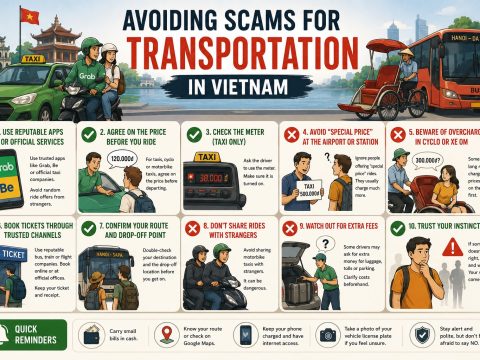
One of the oldest tourist scams in Vietnam involves dishonest taxi drivers. Although this has become less common thanks to ride-hailing apps, it still occasionally happens around airports, train stations, and major tourist attractions.
Some taxis use modified meters that run unusually fast, causing the fare to increase much quicker than it should. Others may intentionally take a longer route to your destination.
How to avoid it:
Use reputable taxi companies whenever possible. Better yet, book your rides through apps like Grab, where the fare is calculated in advance. If you do take a street taxi, make sure the meter starts at the normal base fare and follows a reasonable route using your phone’s map.
Airport Transfer Overcharging
After a long international flight, travelers are often tired and unfamiliar with local prices. Some unofficial drivers wait outside airport terminals offering “cheap” transportation but later demand much higher fares upon arrival.
How to avoid it:
Arrange an airport transfer with your hotel or tour operator before arriving, or use the official taxi queue or a trusted ride-hailing app. Avoid accepting rides from people who approach you inside or outside the terminal.
Fake Currency Confusion
Vietnamese Dong comes in many colorful banknotes, and several denominations have similar sizes and colors. New visitors sometimes confuse 20,000 VND with 500,000 VND or 50,000 VND with 500,000 VND, making them vulnerable to receiving incorrect change.
This is usually caused by confusion rather than intentional fraud, but dishonest sellers may occasionally take advantage of it.
How to avoid it:
Take a moment to familiarize yourself with Vietnamese banknotes before shopping. Count your change before walking away, especially when paying with large bills.
Motorbike Rental Damage Claims
Renting a motorbike is a fantastic way to explore destinations like Da Nang, Phu Quoc, or Ninh Binh. Unfortunately, some rental shops may claim you damaged the bike or exaggerate existing scratches when you return it.
How to avoid it:
Before leaving the rental shop, carefully inspect the motorbike and take clear photos or videos from every angle. Check the brakes, mirrors, tires, lights, and fuel level. Keep the rental agreement until the bike has been officially returned.
Street Vendors Charging Tourist Prices
In busy tourist areas, some street vendors may quote significantly higher prices to foreign visitors. This can happen when buying fruit, snacks, souvenirs, or drinks from mobile vendors.
While bargaining is common in traditional markets, extremely inflated prices should be avoided.
How to avoid it:
Ask for the price before making a purchase. If the seller avoids giving a clear answer, politely walk away. Comparing prices at nearby stalls can also help you understand the normal price range.
The Friendly Shoe Cleaner
This is one of the better-known scams in Vietnam’s larger cities.
A shoe cleaner may approach you offering a free polish or casually start cleaning your shoes without your clear permission. Once finished, they demand an unreasonable amount of money, sometimes many times the normal price.
How to avoid it:
A simple but firm “No, thank you” while continuing to walk is usually enough. Never allow anyone to begin a service that you did not explicitly agree to.
The Coconut or Fruit Carrying Photo Scam
Around famous attractions, someone may enthusiastically offer you a traditional shoulder basket filled with fruit or a pair of coconut baskets for “just a photo.” They often help you pose and even take pictures with your phone.
Only afterward do they ask for a surprisingly large payment.
How to avoid it:
Before accepting any props for photos, clearly ask whether there is a charge. If you are not interested in paying, politely decline and continue your visit.
Fake Tour Operators
Vietnam offers thousands of tours, from day trips to Halong Bay cruises and Mekong Delta excursions. While most operators are professional, fake agencies occasionally advertise unrealistically cheap tours online or near tourist streets.
Some disappear after receiving payment, while others deliver services far below what was promised.
How to avoid it:
Book through established travel agencies with verified reviews or directly through your hotel. If a price seems dramatically lower than every competitor, it deserves extra caution.
Pickpocketing in Crowded Areas
This is not unique to Vietnam and happens in major cities worldwide. Pickpockets typically work in crowded markets, night markets, walking streets, festivals, and on public transportation.
Mobile phones, wallets, and cameras are the most common targets.
How to avoid it:
Carry your backpack in front of you in crowded places. Keep valuables in zipped pockets, avoid displaying expensive jewelry, and never leave your phone on restaurant tables or café counters.
Fake Charity or Donation Requests
Occasionally, people carrying clipboards approach tourists claiming to collect donations for schools, orphanages, or charities. Some may even show official-looking documents.
Many of these collections are not legitimate.
How to avoid it:
If you wish to support local communities, donate directly through reputable organizations rather than giving cash to strangers on the street.
The “Closed Attraction” Trick
A stranger may tell you that a museum, temple, or attraction is unexpectedly closed due to a holiday, ceremony, or maintenance. They then recommend another place, usually a shop, tailor, souvenir store, or travel agency where they receive a commission.
How to avoid it:
Always verify opening hours yourself using official sources or ask hotel staff before changing your plans.
How to Stay Safe While Traveling in Vietnam
Fortunately, avoiding scams in Vietnam is easier than many travelers expect. A few simple habits can make a huge difference.
- Always agree on prices before receiving a service.
- Use trusted transportation apps whenever available.
- Keep small denominations of Vietnamese Dong for daily purchases.
- Avoid carrying large amounts of cash.
- Be cautious of deals that sound too good to be true.
- Trust your instincts. If something feels uncomfortable, politely walk away.
Remember that confidence is one of your best travel tools. Scammers usually target people who appear uncertain or distracted.
Final Thoughts
Although stories about travel scams often receive plenty of attention online, they represent only a tiny fraction of what most visitors experience in Vietnam. Every day, millions of tourists enjoy incredible food, breathtaking scenery, warm hospitality, and memorable adventures without encountering any problems at all.
By staying informed, using common sense, and making informed choices, you can focus on what really matters—discovering the beauty of Vietnam and creating unforgettable memories.
Travel smart, stay aware, and you’ll likely find that the kindness of the Vietnamese people far outweighs the occasional inconvenience caused by a few dishonest individuals.